gantt
    title The Warning Chain (Oct 29)
    dateFormat  HH:mm
    axisFormat %H:%M

    section AEMET
    Red Warning (Coast)      :crit, 07:36, 12h
    Red Warning (Inland)     :crit, 09:41, 10h

    section Hydrology (CHJ)
    Poyo sensor collapse     :active, 19:00, 1h

    section Civil Protection
    ES-Alert message to mobiles :milestone, 20:11, 1min
The impact of the climate crisis on intense precipitation and Mediterranean floods
What is a DANA?
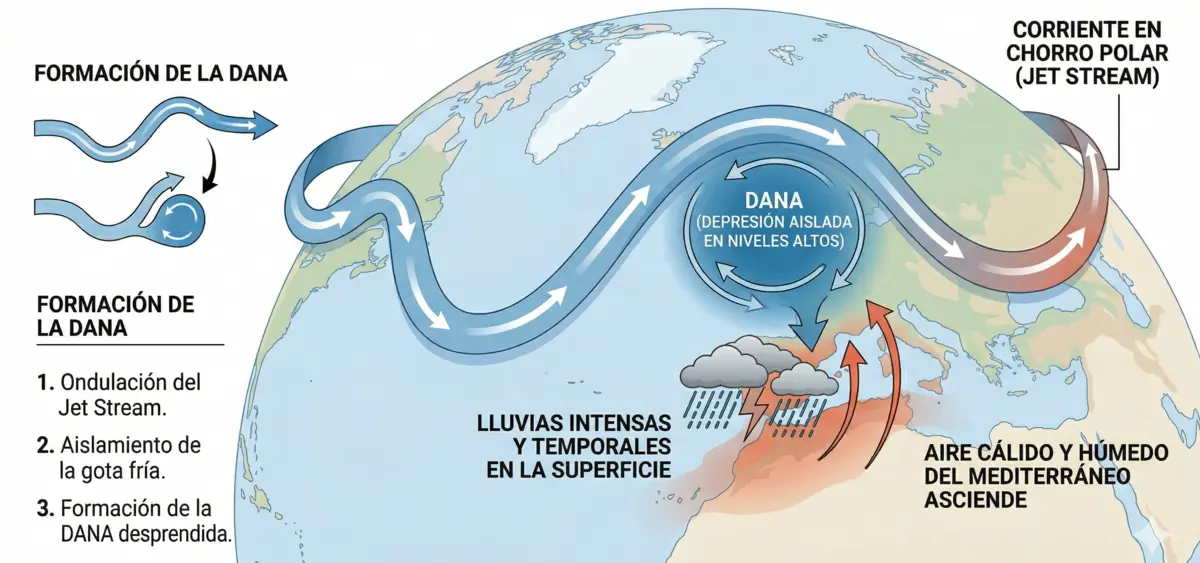
- DANA: Isolated Depression at High Levels (Cut-off Low). A closed low-pressure system in the high troposphere that forms when a ripple in the polar jet stream detaches from the general west-east circulation.
- Vertical instability: This large isolated pocket encloses very cold air at high altitude. When situated over the warm and extremely humid air of the Mediterranean, it generates severe vertical instability that triggers deep convection processes and storm formation.
- The danger of blocking: Being decoupled from the main wind flow, DANAs have erratic movement and can remain blocked.
- Orographic forcing: In the Iberian Mediterranean, easterly winds push humid air toward the coastal orography, incessantly feeding the storm over the same basins.
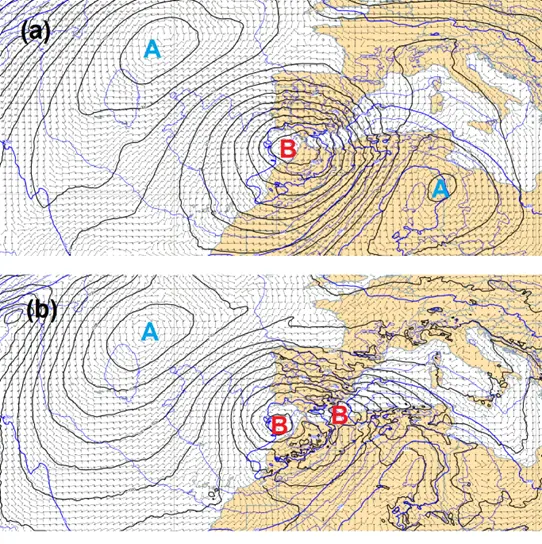
DANA 10/29/2024
- Quasi-stationary DANA: DANA stalled over the southern peninsula (Gulf of Cádiz), blocked for days.
- Thermodynamic fuel: An abnormally warm Mediterranean injected record levels of instability and water vapor (Agosta-Scarel et al. 2025).
- Persistence and organization: Mesoscale convective systems stalled for hours over the same basins (AEMET 2024).
- Climate attribution: Global warming increased rainfall intensity by ~20% and expanded the area of extreme impact by more than 50% (Calvo-Sancho et al. 2025; Barriopedro et al. 2025).
- Orography: Coastal mountain ranges acted as continuous mechanical forcing, elevating the humid air mass incessantly.
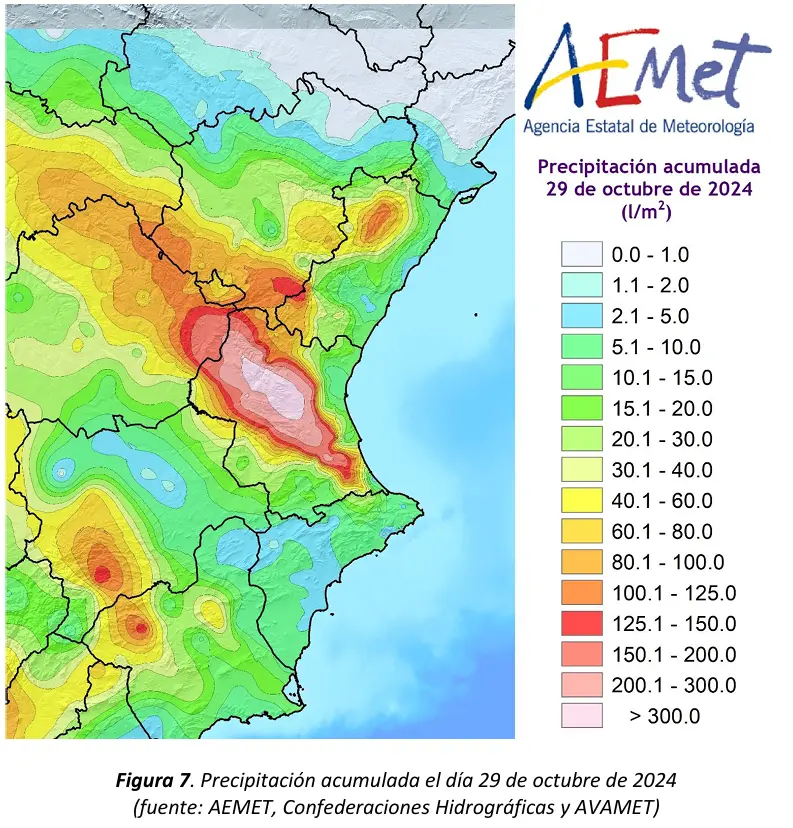
Pluviometric data (daily)
Official data
- Turís: 771.8 mm (Absolute national historical record) (AEMET 2024; Calvo-Sancho et al. 2025).
- Chiva: ~500 mm in a few hours (Castro-Melgar et al. 2025).
- Utiel: 243 mm (AEMET 2024).
- Operational limitation: Official public data usually have a resolution of 1 h and are not always available in real-time during critical situations (Rombeek et al. 2025).
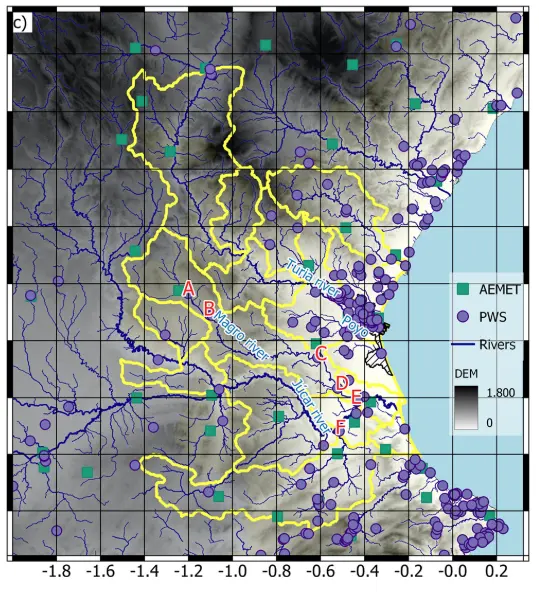
Citizen data
Anticipation (Citizen Science and PWS)
- Density: The network of personal weather stations (PWS) and networks like AVAMET are ~7 times denser than the official network in Valencia (Rombeek et al. 2025).
- Real-time: They provide accessible data every 5 minutes.
- Tactical advantage: This hyper-density allowed monitoring storm dynamics and detecting extreme intensity peaks in the headwaters hours before the flood reached southern municipalities (Rombeek et al. 2025).
- Precision: Possible deficiencies in network maintenance are compensated by the density and speed of data publication.
Record intensity (hourly data)
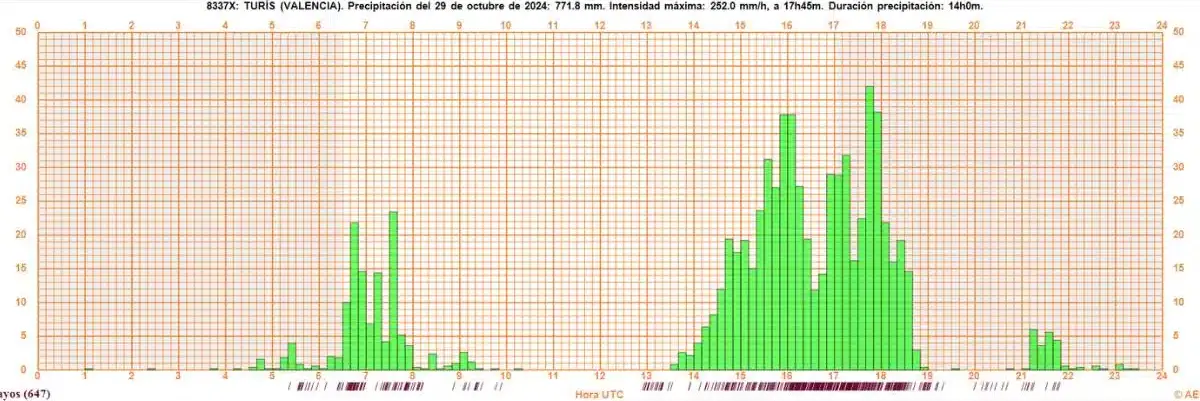
Hourly precipitation band in Turís Castellón Diario
- Hourly intensity: Turís recorded 185 mm in 1 hour (AEMET 2024).
| Duration | Turís (AEMET) | Previous record | |
|---|---|---|---|
| 1 hour | 184.6 mm | ||
| 6 hours | 620.7 mm | 312.0 mm (Málaga, 2018) | |
| 24 hours | 771.8 mm | 817 mm (Oliva, 1987) |
- Drainage capacity: These precipitation rates exceed any urban infrastructure design or natural infiltration capacity.
Dismantling the myth of “natural disasters”
- There are no natural disasters: Floods are a natural threat (a physical phenomenon), but not a natural disaster. The disaster is a social construction that depends on our exposure and our vulnerability (Llasat 2021; Kelman 2020).
- Catastrophe vs. Disaster: The catastrophe is the extreme rain, but the disaster is the resulting human and economic impact when colliding with a vulnerable and poorly planned territory (Rodríguez Salgado 2025).
- The human factor and the “levee effect”: The Valencia disaster evidences how uncontrolled urbanization and the false sense of security of infrastructure have triggered the population’s exposure to risk (Llasat et al. 2024; Olcina and Morote 2025).
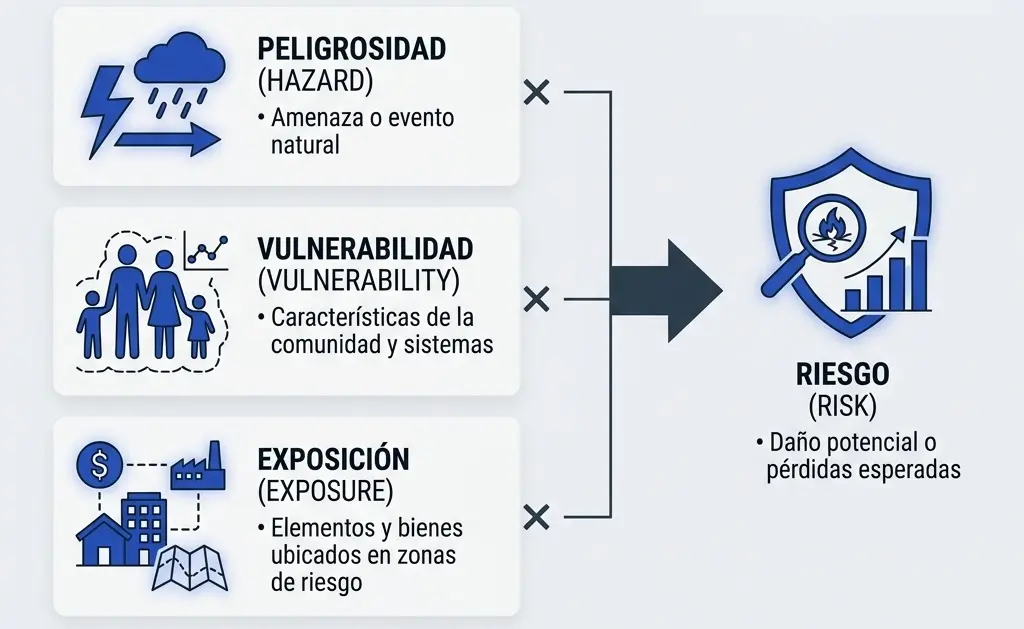
Understanding the risk equation will allow us to understand why disasters are not “natural” and where we can act to reduce their impact.
The risk equation: R = H * V * E
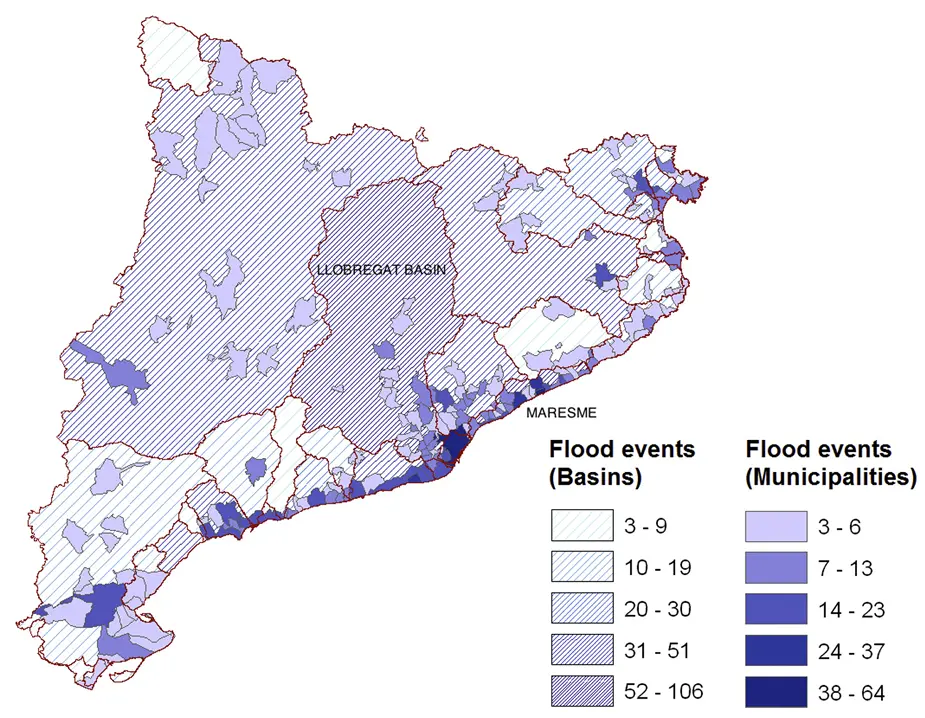
History of floods in Catalonia
- An intrinsic threat: Flash floods are consubstantial to our geography due to short rivers, steep slopes, and proximity to the Mediterranean Sea.
- Historical memory: GAMA group studies conclude that the increase in disasters is directly linked to human occupation of floodable zones, rather than purely climatic anomalies of the past (Llasat et al. 2005; Llasat et al. 2016).
- The great lesson: Recurrence is the norm. Floods have always existed, but today, reckless occupation of the territory collides with an increasingly extreme and warm atmosphere (Blöschl et al. 2020).
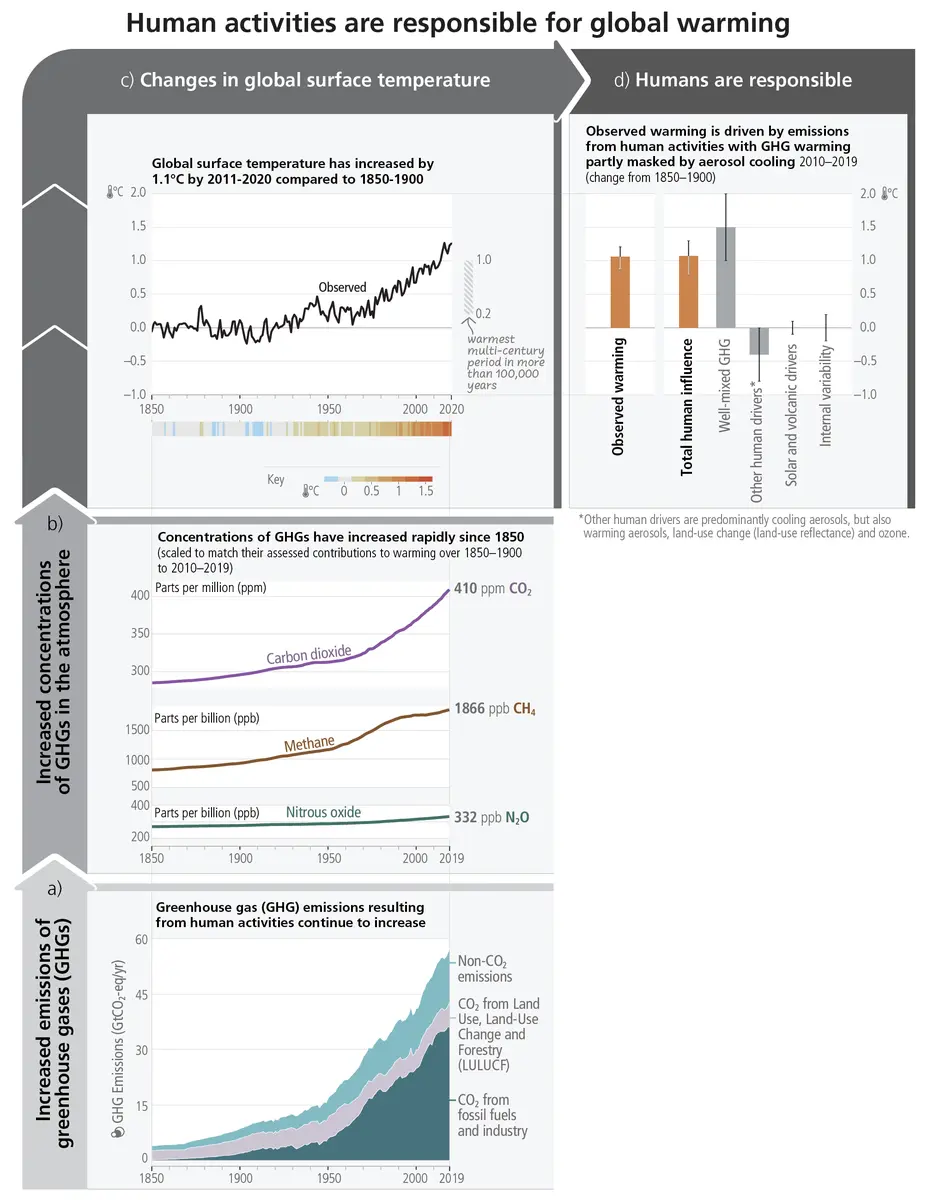
Climate change
- Definition: Long-term alteration of temperatures and global climate patterns, driven by the accumulation of Greenhouse Gases (GHG) of anthropogenic origin.
- Irrefutable evidence:
- CO₂ concentration: We exceed 420 ppm, levels not seen in the last 3 million years.
- Global warming: Increase of ~1.2 °C relative to the pre-industrial era (IPCC AR6).
- Thermal records: The last decade has been the warmest historically recorded.
- The Mediterranean: Warms 25% faster than the global average (Cramer et al. 2018).
- Scientific consensus: Unequivocally caused by human activity (burning of fossil fuels, changes in land use and plant cover, etc.).
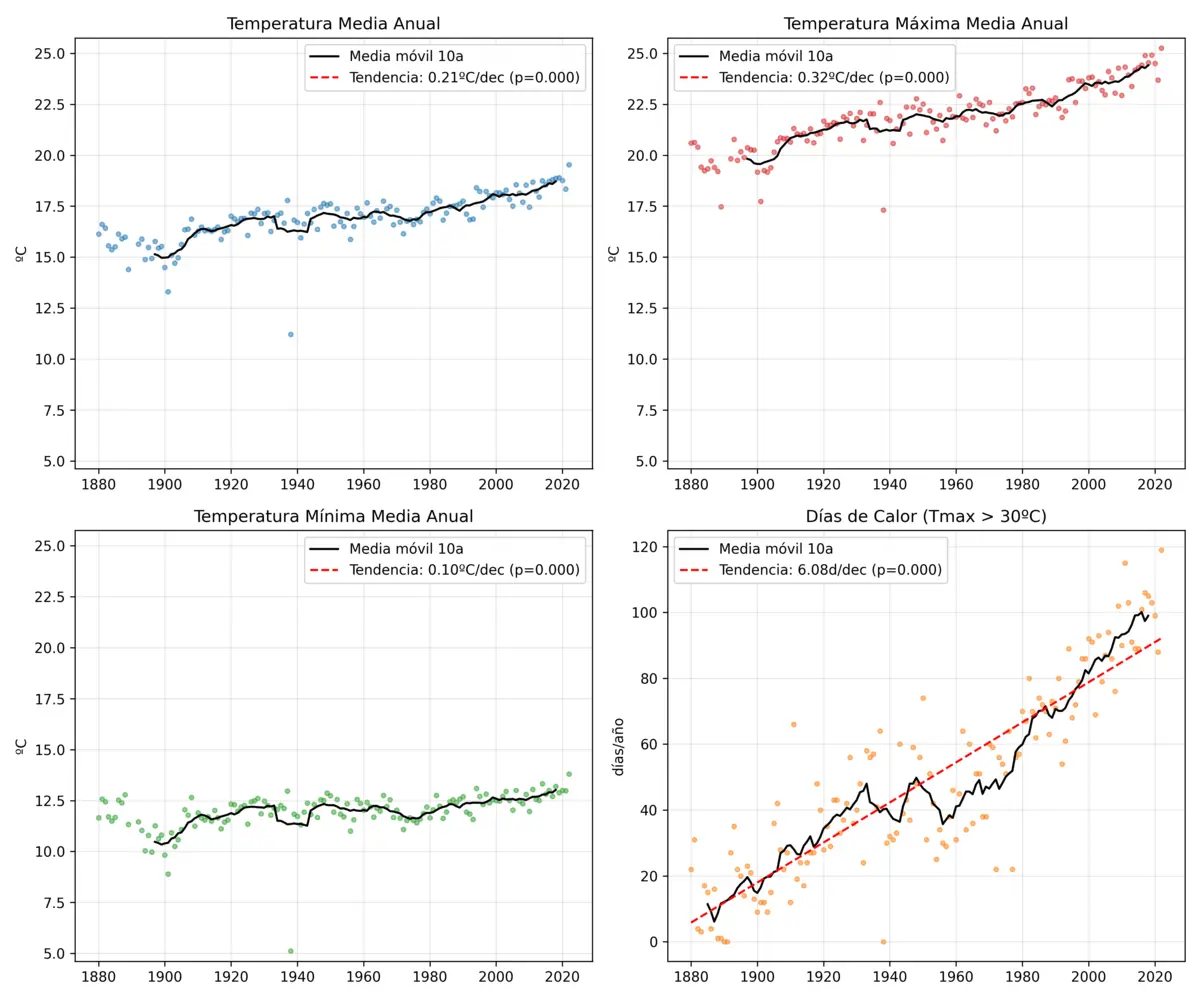
Temperature trends (local)
Ebro Observatory (1880-2022): - Mean Temperature: Significant increase of +0.21 ºC/decade. - Maximum Temperatures: The most extreme indicator, with a rise of +0.32 ºC/decade. - Minimum Temperatures: Increase of +0.11 ºC/decade. - Heat days (T > 30ºC): Drastic increment of +6.1 days/decade.
🔴 There is no doubt that local temperature increases significantly and with more marked trends than global averages.
The thermodynamics of intense precipitation
- The Mediterranean as a “battery”: Global warming accumulates thermal energy in the sea.
- Reaching autumn with record temperatures (e.g. 28-29 °C) injects massive amounts of heat and moisture into the lower atmosphere (Agosta-Scarel et al. 2025).
- The 7% rule (Clausius-Clapeyron): Basic physics dictates that for every 1 °C of warming, the air can retain ~7% more water vapor (Calvo-Sancho et al. 2025; Campos, Grayson, Saurral, Olmo, et al. 2025).
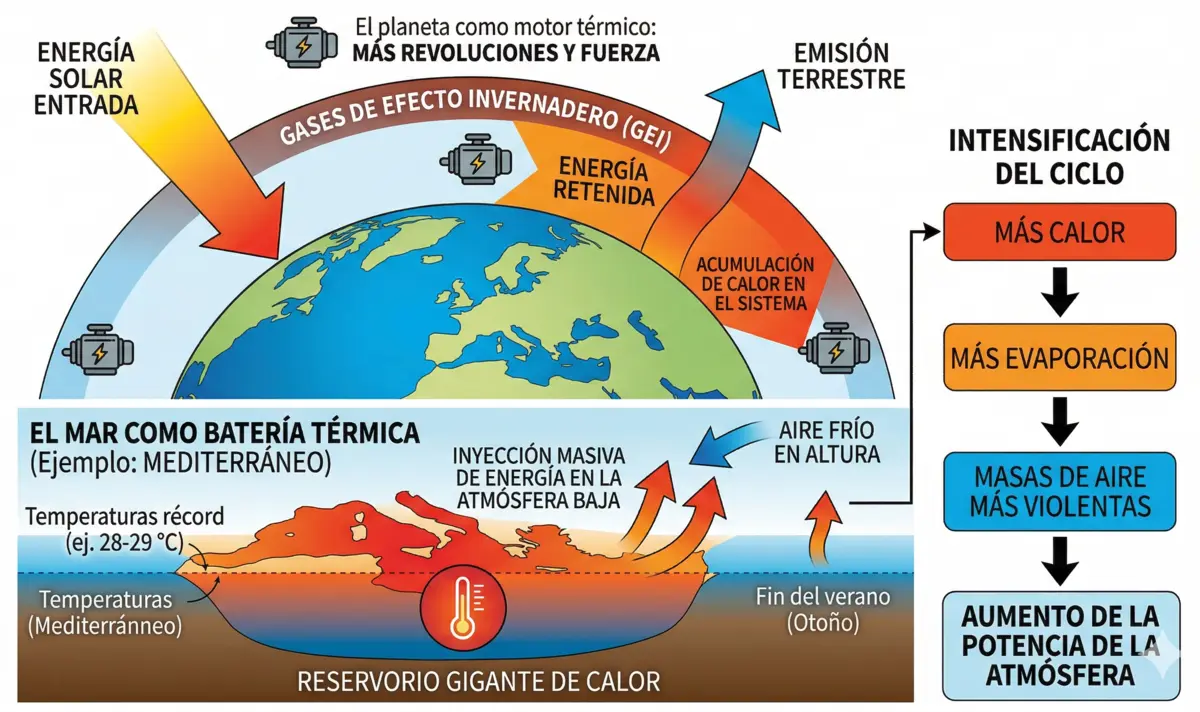
- Explosive torrentiality: This massive overload of “fuel” (moisture) and energy makes precipitation much more violent in very short periods (mm/h) (Llasat et al. 2021; Calvo-Sancho et al. 2025).
- The role of the DANA: The appearance of a DANA generates atmospheric instability that “squeezes” that moisture in the form of torrential rain, exceeding any natural or artificial drainage capacity.
Dynamics also change
- Not only does climate change influence thermodynamics, it also affects atmospheric dynamics.
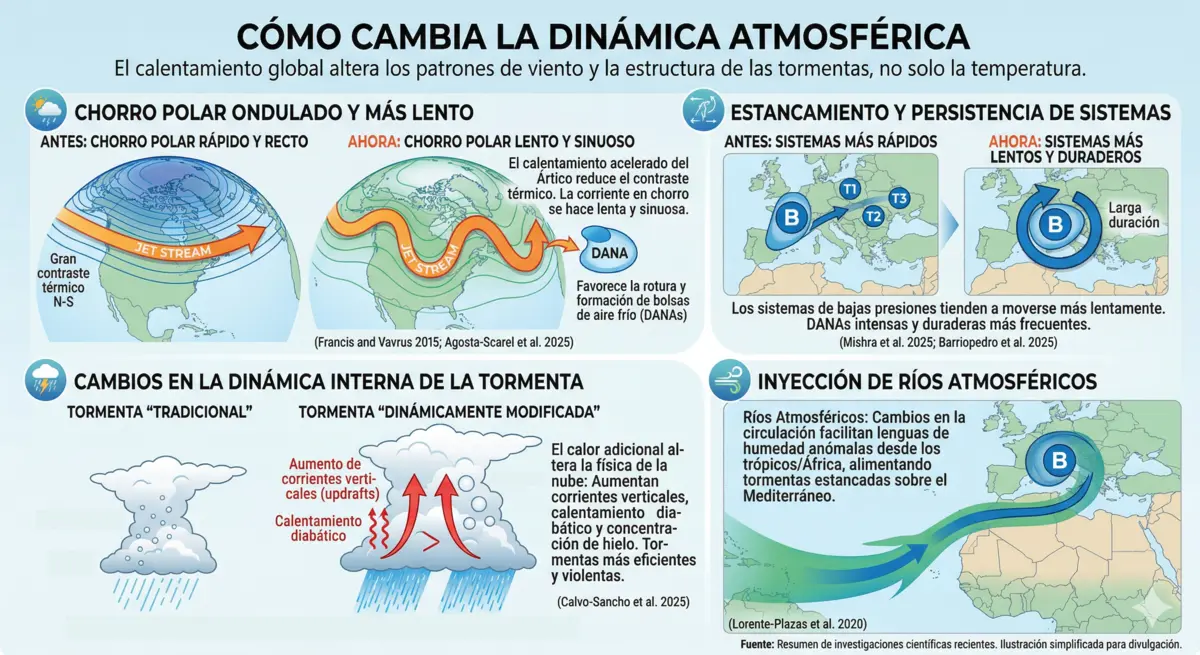
Sources: Francis and Vavrus (2015); Agosta-Scarel et al. (2025); Lorente-Plazas et al. (2020); Mishra et al. (2025);Barriopedro et al. (2025); Calvo-Sancho et al. (2025).
Observed precipitation trends
Trends observed at the Ebro Observatory (1880-2022) at a daily scale:
- Fewer rainy days (≥1mm): Decrease of -1 day/decade (1948-2022 period), on the limit of statistical significance (p=0.06).
- More intensity (SDII): Robust and significant increase in mean intensity per rain day (+0.15 mm/day per decade in the long series 1905-2022, p<0.05).
- Extremes (Max 24h): Positive signal in the last 25 years (+8.4 mm/decade, 1998-2022), although high variability hides statistical significance (p=0.29).
Conclusion: It rains fewer times, but when it does, the atmosphere discharges more intensely. But it must be emphasized that the changes are not very evident at a daily scale.
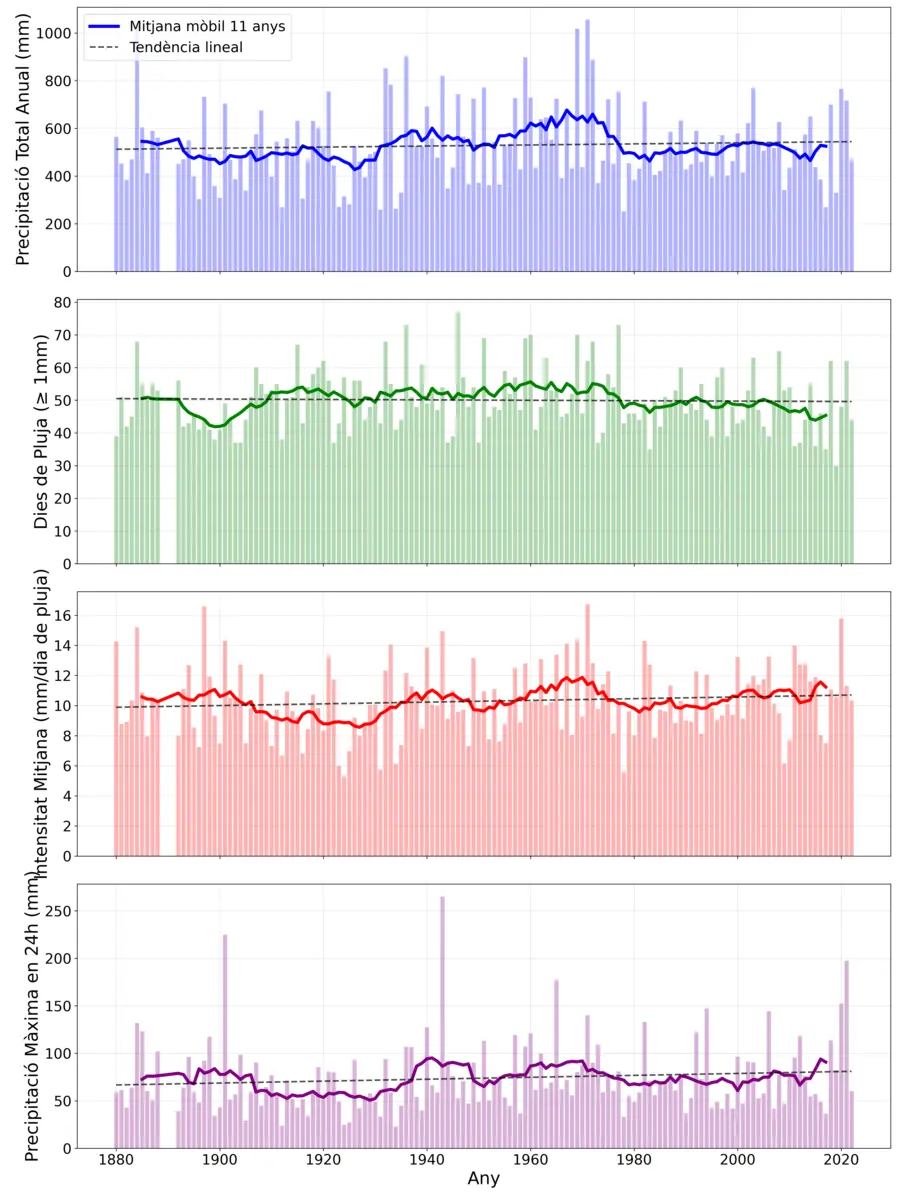
Intensity and frequency trends
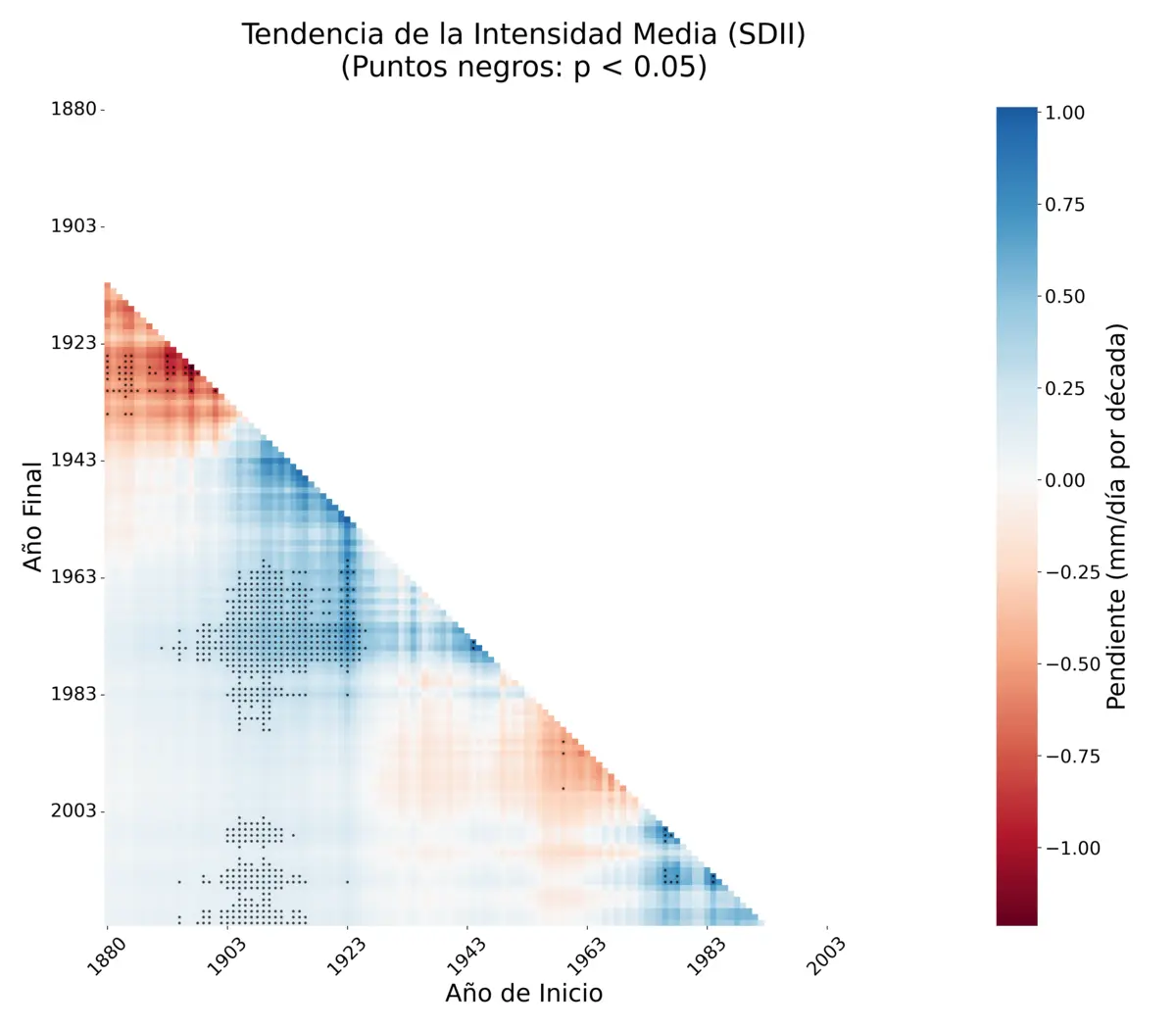
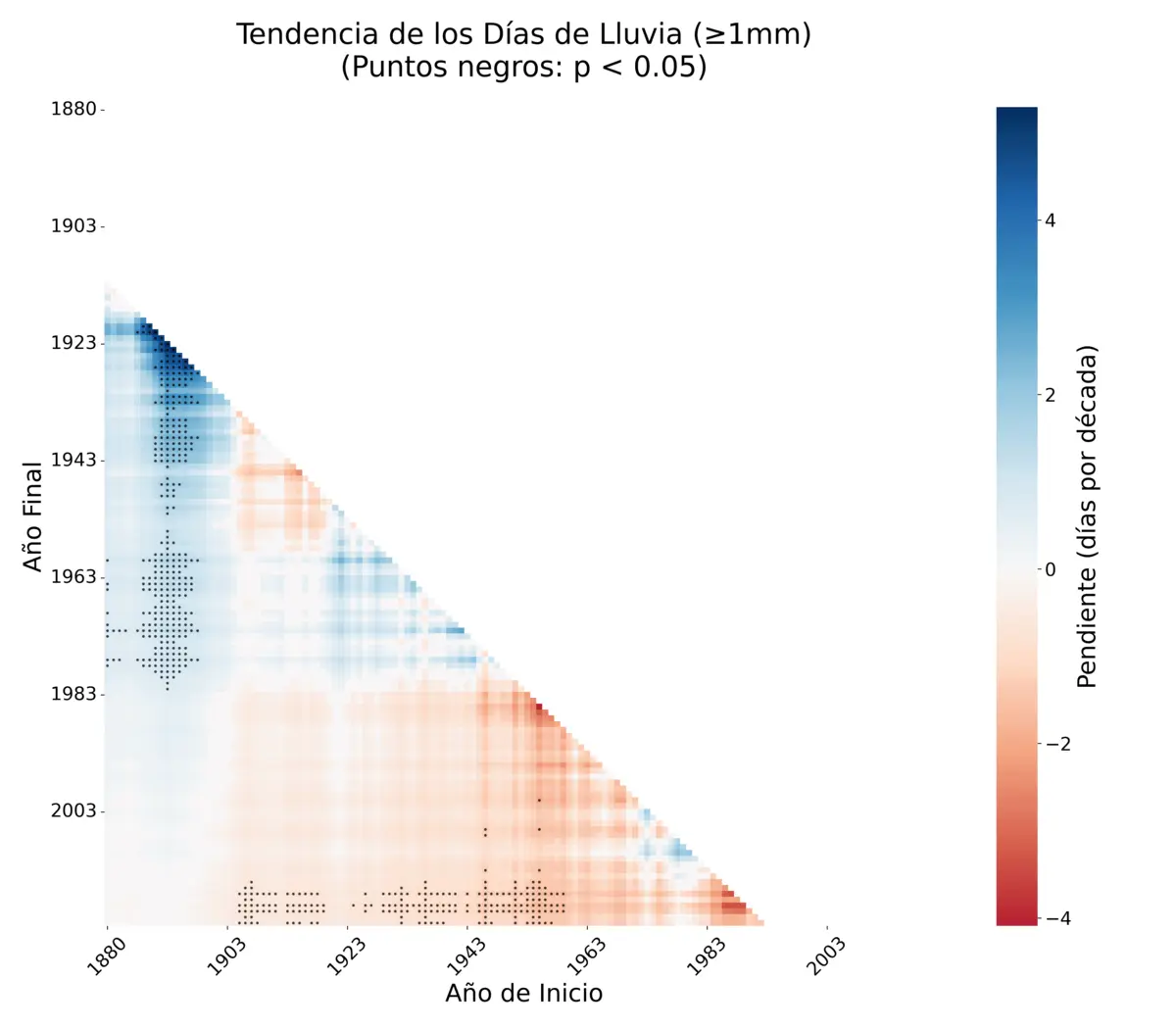
- Real climate signal: The black dots indicate the periods of significant trend.
- Double signal: The increase in intensity (blue) and the decrease in frequency (red) are significant since the beginning of the 20th century.
Observed precipitation trends
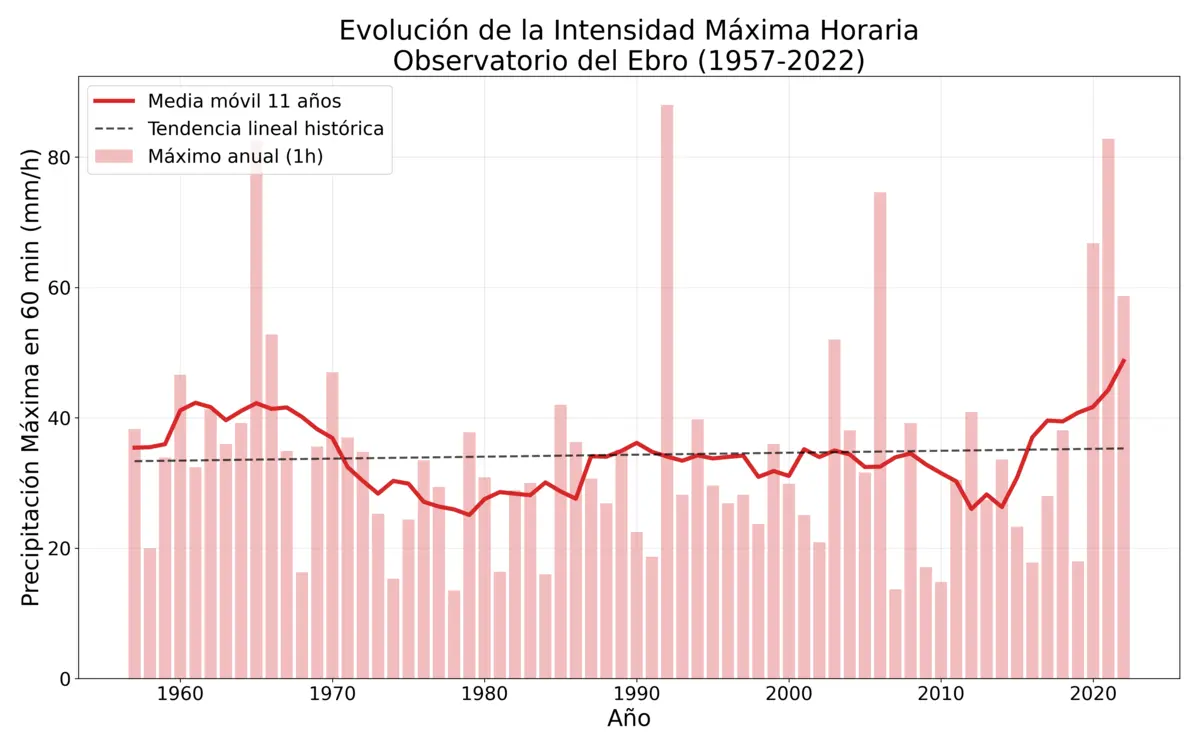
Maximum intensity (hourly) at the Ebro Observatory (time scale of flash floods):
- Historical series (1957-2022): Signal marked by extremely high interannual variability.
- Recent trend (50 years): Increment of +1.7 mm/h per decade (since 1973).
- Signal last stage (30 years): Increment of +2.3 mm/h per decade (1993-2022).
- Significance: High variability hides statistical significance (p > 0.10), but the physical signal of increase in the era of accelerated warming is persistent.
Future projections
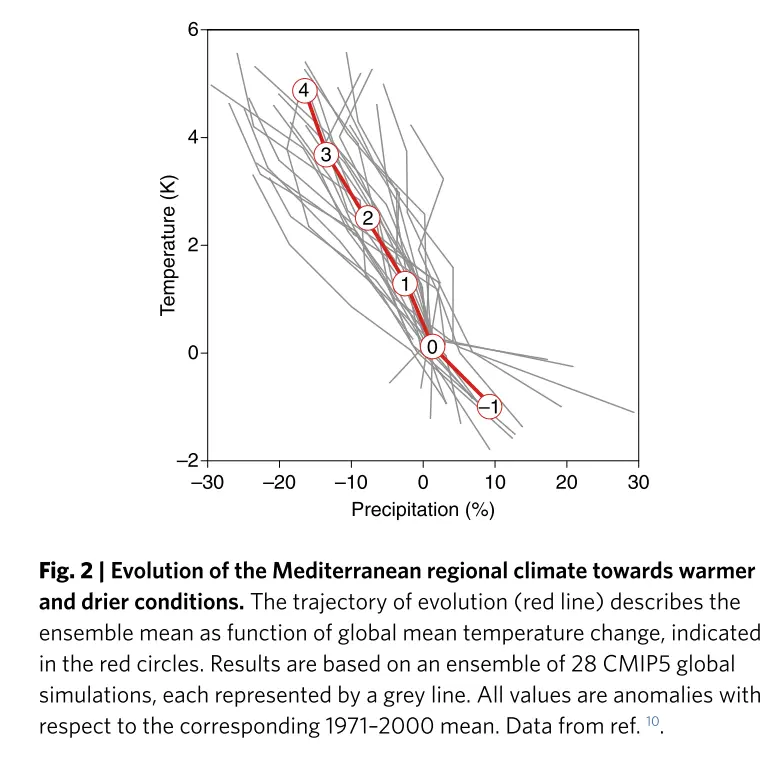
The Mediterranean is heading toward a scenario of interconnected and compound risks.
Torrentiality projections:
Under high emissions scenarios, the magnitude of extreme events could increase up to 100% in 50 years (Zittis et al. 2021).
Rainfall rates in fractions of 1 to 6 hours increase drastically compared to daily averages (Requena et al. 2023; Calvo-Sancho et al. 2025).
Droughts and floods are related: The increase in prolonged droughts degrades natural defenses and plant cover (forests), drastically reducing soil infiltration capacity (Cramer et al. 2018).
Droughts and floods
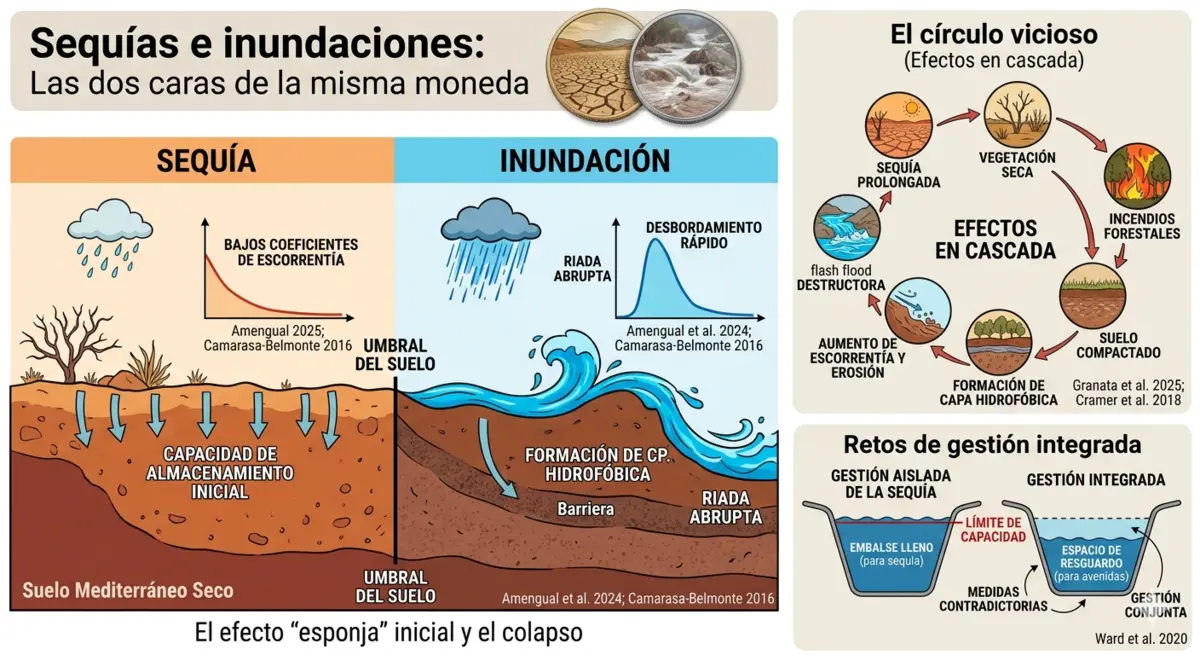
Droughts and floods are interrelated and can even occur at the same time.
- Dry Mediterranean soils have a great capacity for storage and initial infiltration: low usual runoff coefficients.
- But if precipitation exceeds infiltration capacity, the flood is triggered abruptly.
- The vicious circle: Prolonged droughts dry out vegetation, compact the soil and increase the risk of fires. This creates “hydrophobic” terrain (which repels water) and without natural barriers, which multiplies runoff speed, erosion and the destructive force of the flood (Granata et al. 2025; Cramer et al. 2018).
- Integrated management: Droughts and floods cannot be managed in isolation (Ward et al. 2020).
Uncertainties and limits of climate predictions
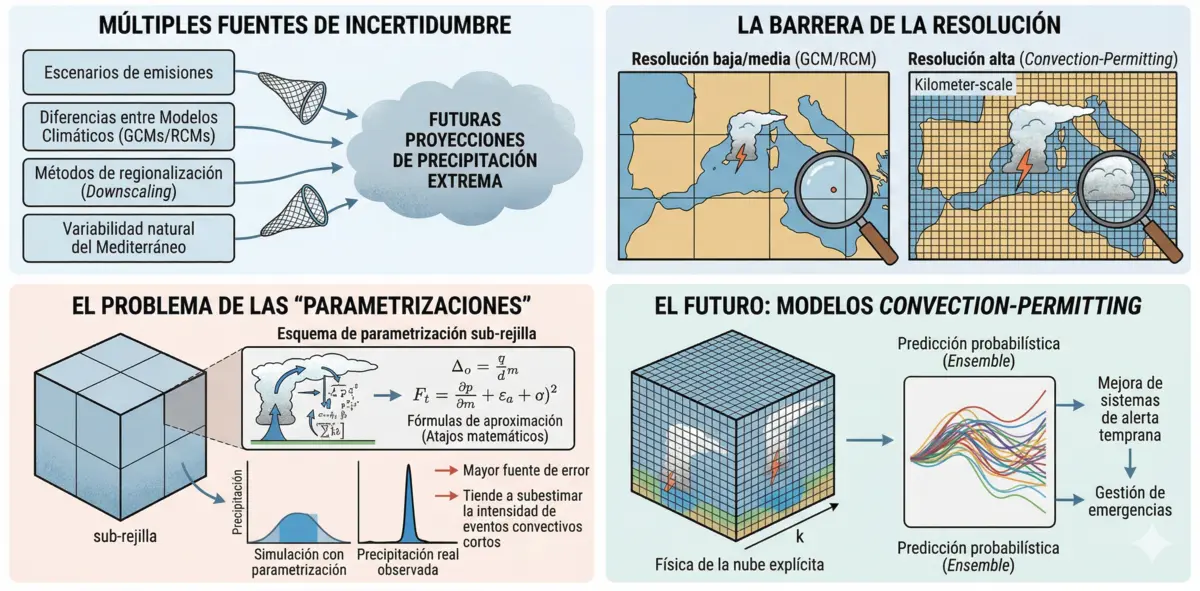
- Despite uncertainties, the thermodynamics of climate change is very clear and we must prepare for a future with more droughts and more torrential precipitation.
Current climate models systematically underestimate the intensity of short-duration convective storms, which implies that projections could be conservative compared to future reality (Llasat 2021; Calvo-Sancho et al. 2025).
Precautionary principle: In territorial planning and infrastructure design, climate scenarios should not be taken as an absolute maximum limit. We must assume much larger safety margins against the new torrentiality.
Prediction of extreme events
- Meteorological models predict synoptic conditions well, but have great difficulty accurately predicting the location, intensity and exact moment of a local convective storm (Amengual et al. 2024; Flaounas et al. 2022).
- Probabilistic scenarios: Operationally, we must move toward Ensemble Prediction Systems (Ensembles or EPS) of very high resolution (convection-permitting) (Amengual et al. 2024; Amengual 2025).
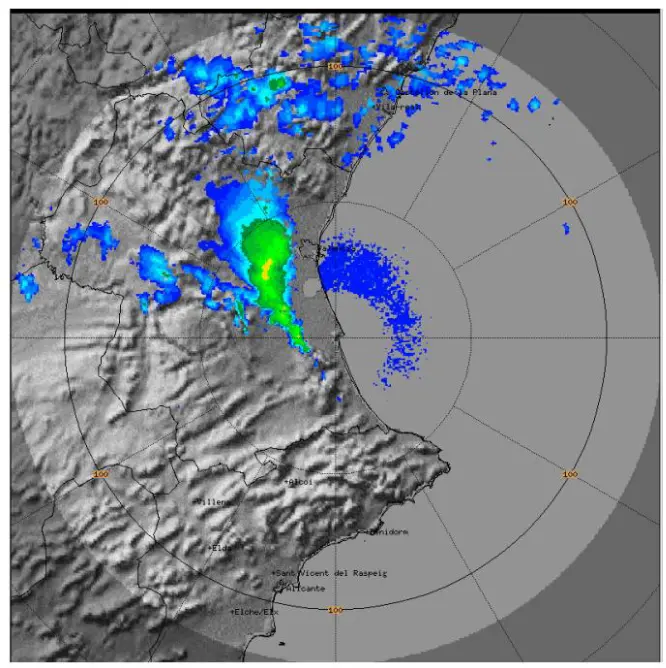
Nowcasting: Given that reaction time against a flash flood is minimal, survival depends on nowcasting (0-3 hour prediction). This requires aggressive real-time monitoring (Price et al. 2011).
New warning networks: Integration of radars, lightning detection networks and citizen stations is critical to anticipate the flood before it wipes out municipalities (Price et al. 2011; Rombeek et al. 2025).
Better not to need predictions: A society with low vulnerability and exposure will not depend so much on meteorological prediction.
New vulnerable citizens and tourists
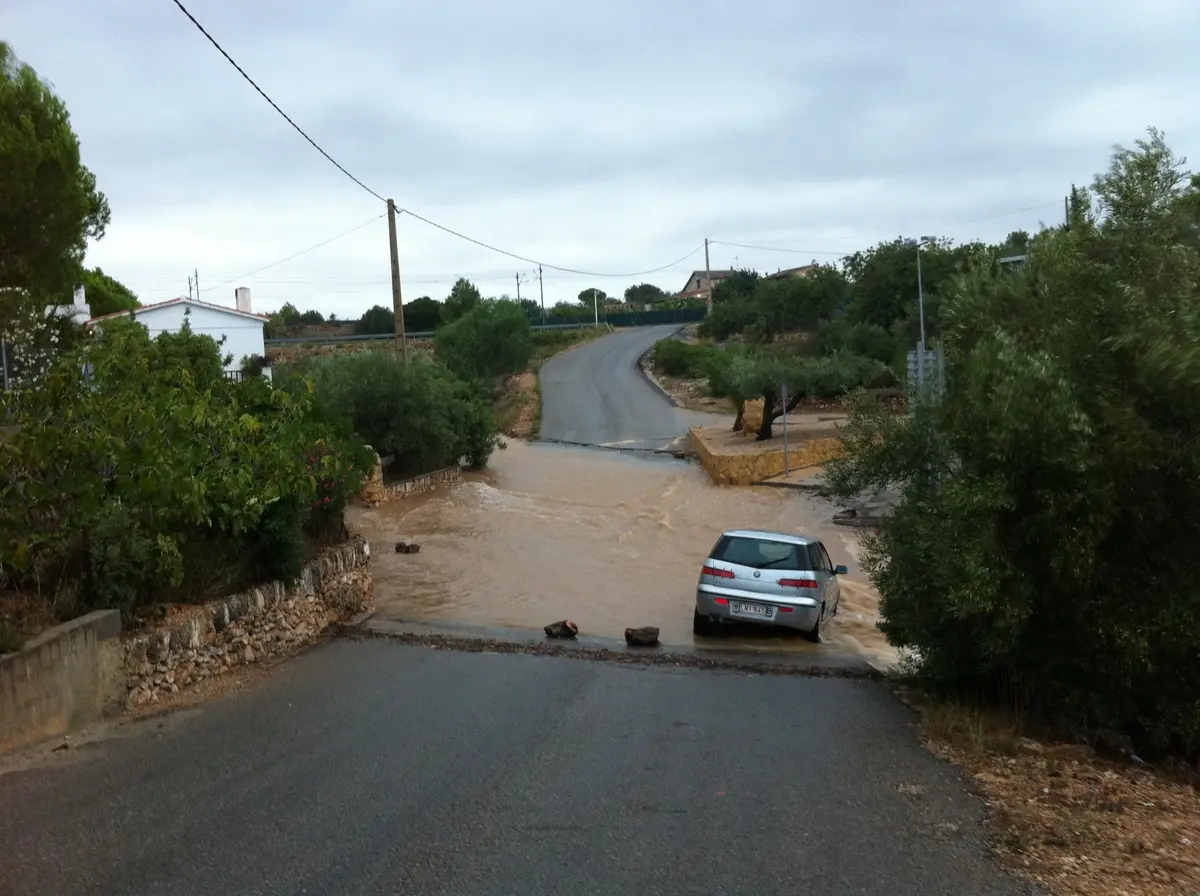
- Vulnerability by mislocation: The lack of mental maps of the territory prevents identifying safe zones instinctively.
- Ignorance of local codes: Incapacity to interpret natural signals (e.g. rising level of a stream even if it doesn’t rain locally) or specific sound/visual warnings.
- False perception of security: The tourist usually underestimates the speed and force of a Mediterranean flash flood when comparing it with the fluvial dynamics of their home countries.
Satellite diagnosis of the 2024 DANA
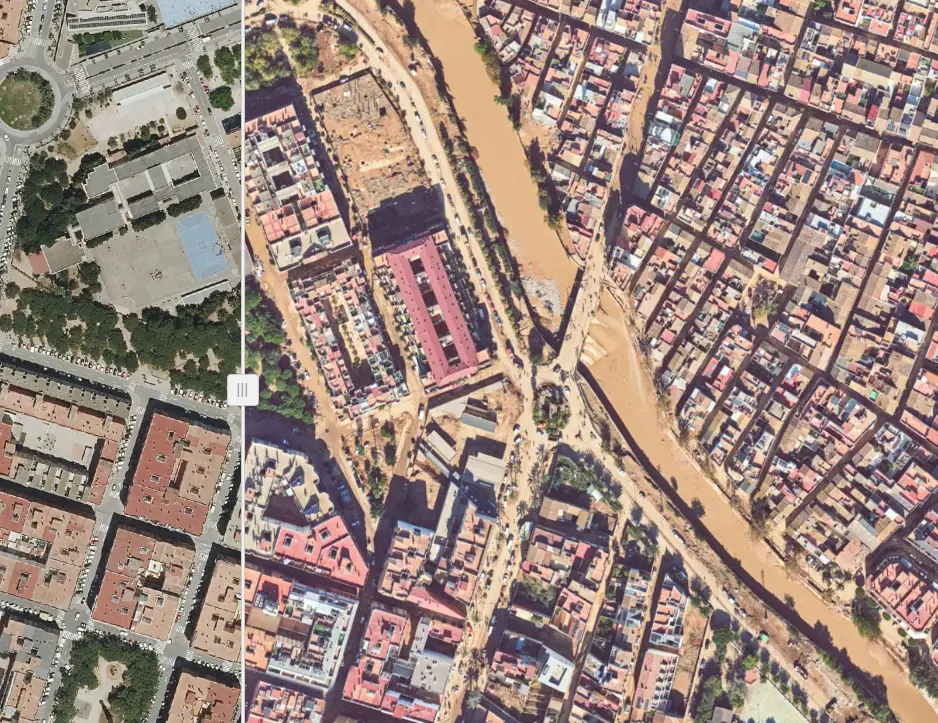
- Extension: 199 km² flooded in the Valencia Metropolitan Area.
- Exposed population: ~90,000 direct residents (~7.8% of the metropolitan population).
- Affected critical infrastructure:
- 50 schools flooded or in exclusion zone.
- 7 health centers/hospitals affected.
- 30 km of railway lines and 15 km of highways underwater.
- Agricultural impact: 129 km² of rice fields in the Albufera submerged.
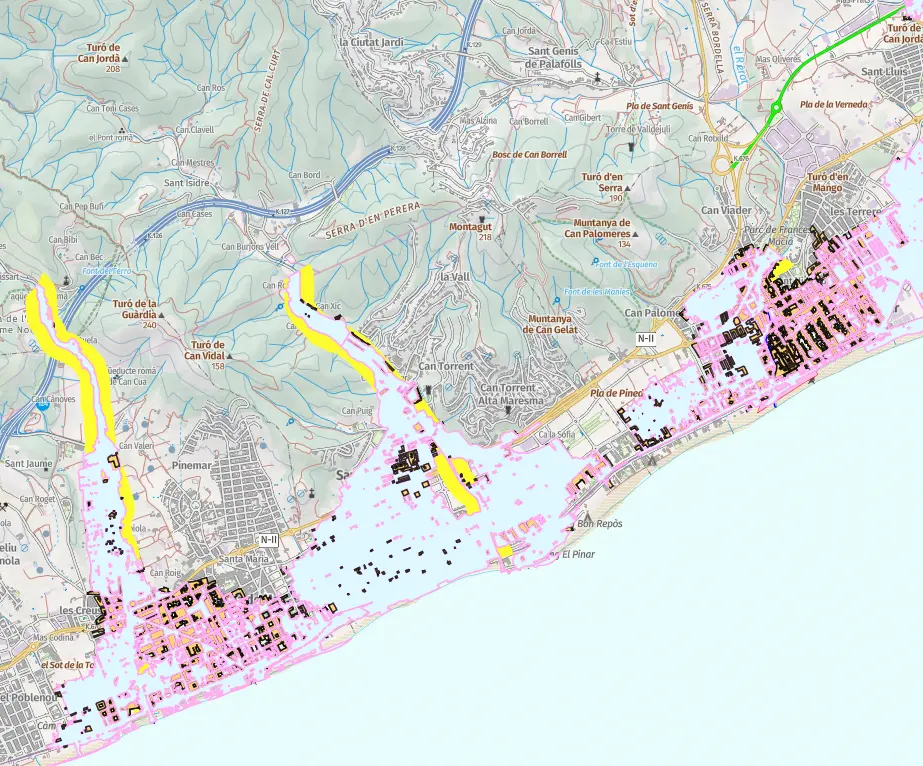
In many areas of Catalonia, a similar event would have similar impacts, due to the high degree of exposure.
Source: Castro-Melgar et al. (2025)
Questions and debate
Authorship notes
- This presentation was made by Dr. Pere Quintana Seguí, researcher in hydrology and climate change, at the Ebro Observatory (Universitat Ramon Llull - CSIC).
- The content is based on an exhaustive review of the most recent scientific literature on floods in the Mediterranean, as well as on data and analysis of recent events such as the Valencia DANA (2024).
- Artificial intelligence tools have been used to produce the presentation for the generation of illustrations, infographics, summaries and information organization, but the content has been carefully reviewed and validated by the author to ensure its scientific rigor. Specifically, Gemini, Gemini CLI and NotebookLM have been used.

- Anaïs Barella Ortiz has carried out a final review to improve the wording and clarity of the messages, but the scientific content and conclusions are entirely Dr. Quintana’s.
Bibliography
3Cat. 2024a. Acord Per Revisar La Seguretat Dels Càmpings Inundables: "No Hi Ha Cap Llista Negra". https://www.3cat.cat/3catinfo/acord-per-revisar-la-seguretat-dels-campings-inundables-no-hi-ha-cap-llista-negra/noticia/3368731/.
3Cat. 2024b. Quins Càmpings Estan En Zones Inundables i Quin Risc Tenen: El Govern En Posa 16 Al Punt de Mira / Acord Per Revisar La Seguretat Dels Càmpings Inundables. https://www.3cat.cat/3catinfo/quins-campings-estan-en-zones-inundables-i-quin-risc-tenen-el-govern-en-posa-16-al-punt-de-mira/noticia/3321282/.
Abril Cabreros, Paula. 2025. Nuevo Decreto-Ley Para Campings En Zonas de Riesgo de Inundación En Cataluña. https://legislaciononline.es/novedades/26.
AEMET. 2024. Informe Sobre El Episodio Meteorológico de Precipitaciones Torrenciales y Persistentes Ocasionadas Por Una DANA El Día 29 de Octubre de 2024. AEMET. https://www.aemet.es/documentos/es/conocermas/recursos_en_linea/publicaciones_y_estudios/estudios/informe_episodio_dana_29_oct_2024_.pdf.
Agosta-Scarel, Eduardo Andres, David Correl, María José Estrela, and Juan Javier Miró. 2025. “A Un Año de La DANA de Valencia, ¿Preludio de Una Nueva Era Climática?” Cuadernos de Geografía de La Universitat de València, December, 221–37. https://doi.org/10.7203/cguv.114-15.31889.
Alcantara, Carmen Sedeño. 2025. “Interés Público y Desinformación En Tiempos de Crisis: El Caso de La DANA En Valencia En 2024.” Revista Internacional de Relaciones Públicas 15 (December): 103–22. https://doi.org/10.5783/revrrpp.v15i30.920.
Amengual, A. 2025. “Characterization of Extreme Flash Floods in Mediterranean Spain.” Journal of Hydrology 659 (October). https://doi.org/10.1016/j.jhydrol.2025.133229.
Amengual, Arnau, Romu Romero, María Carmen Llasat, Alejandro Hermoso, and Montserrat Llasat-Botija. 2024. “Hydrometeorological Controls of and Social Response to the 22 October 2019 Catastrophic Flash Flood in Catalonia, North-Eastern Spain.” Natural Hazards and Earth System Sciences 24 (July): 2215–42. https://doi.org/10.5194/nhess-24-2215-2024.
Barriopedro, David, Bernat Jiménez-Esteve, Soledad Collazo, Jose M. Garrido-Perez, Juan Emmanuel Johnson, and Ricardo García-Herrera. 2025. “A Multimethod Attribution Analysis of Spain’s 2024 Extreme Precipitation Event.” Bulletin of the American Meteorological Society 106 (December): E2440–60. https://doi.org/10.1175/BAMS-D-25-0049.1.
Blöschl, Günter, Andrea Kiss, Alberto Viglione, et al. 2020. “Current European Flood-Rich Period Exceptional Compared with Past 500 Years.” Nature 583 (July): 560–66. https://doi.org/10.1038/s41586-020-2478-3.
Calvo-Sancho, Carlos, Javier Díaz-Fernández, Juan J. González-Alemán, et al. 2025. Climate Change Unleashed: Physical-Based Attribution Analysis Proves Human-Induced Amplification of Valencia’s Deadly Flooding. Research Square. https://doi.org/10.21203/rs.3.rs-6709965/v1.
Campos, Diego, Katherine Grayson, Ramiro Saurral, Sebastian Beyer, et al. 2025. The October 2024 Extreme Precipitation Event over Valencia: Storyline Attribution of the Synoptic-Scale Thermodynamic Drivers. https://doi.org/10.5194/egusphere-2025-5929.
Campos, Diego, Katherine Grayson, Ramiro Saurral, Matías Olmo, and Francisco Doblas-Reyes. 2025. Attribution of the Synoptic-Scale Meteorological Conditions Associated with the October 2024 DANA Event over Valencia, Spain. https://doi.org/10.5194/ems2025-366.
Castro-Melgar, Ignacio, Triantafyllos Falaras, Eleftheria Basiou, and Issaak Parcharidis. 2025. “Assessment of the October 2024 Cut-Off Low Event Floods Impact in Valencia (Spain) with Satellite and Geospatial Data.” Remote Sensing 17 (July). https://doi.org/10.3390/rs17132145.
Conesa, Pedro Romero. 2025. Los Efectos Económicos de La DANA. Trabajo de Fin de Grado. Universidad Politécnica de Cartagena.
Cramer, Wolfgang, Joel Guiot, Marianela Fader, et al. 2018. “Climate Change and Interconnected Risks to Sustainable Development in the Mediterranean Mate Change and Interconnected Risks to Sustainable Development in the Mediterranean.” Nature Cli-Mate Change 8. https://doi.org/10.1038/s41558-018-0299-2ï.
Cutter, Susan L., Bryan J. Boruff, and W. Lynn Shirley. 2003. “Social Vulnerability to Environmental Hazards.” Social Science Quarterly 84 (June): 242–61. https://doi.org/10.1111/1540-6237.8402002.
Departament d’Ensenyament. 1998. Pla d’emergència Del Centre Docent: Consells i Instruccions a Tenir En Compte. Generalitat de Catalunya. https://educacio.gencat.cat/ca/departament/publicacions/monografies/gestio-centre/pla-emergencia-centre/index.html.
Direcció General de Protecció Civil. 2023. Instrucció Sobre Els Criteris Tècnics a Aplicar En l’elaboració Dels Informes d’avaluació Tècnica En Instal·lacions de Càmping Ubicades En Zona Inundable (PAU_02_v03_23). Generalitat de Catalunya. Departament d’Interior.
Elansari, Samar. 2025. Vuit Equipaments de Molins de Rei Es Troben En Zones Inundables. https://viumolinsderei.com/2025/11/03/vuit-equipaments-de-molins-de-rei-es-troben-en-zones-inundables/.
Flaounas, Emmanouil, Silvio Davolio, Shira Raveh-Rubin, et al. 2022. “Mediterranean Cyclones: Current Knowledge and Open Questions on Dynamics, Prediction, Climatology and Impacts.” In Weather and Climate Dynamics, vol. 3. Copernicus Publications. https://doi.org/10.5194/wcd-3-173-2022.
Francis, Jennifer A., and Stephen J. Vavrus. 2015. “Evidence for a Wavier Jet Stream in Response to Rapid Arctic Warming.” Environmental Research Letters 10 (January): 014005. https://doi.org/10.1088/1748-9326/10/1/014005.
Gallego, M. C., R. M. Trigo, J. M. Vaquero, et al. 2011. “Trends in Frequency Indices of Daily Precipitation over the Iberian Peninsula During the Last Century.” Journal of Geophysical Research Atmospheres 116. https://doi.org/10.1029/2010JD014255.
Galvez-Hernandez, Pablo, Yining Dai, and Carles Muntaner. 2025. “The DANA Disaster: Unraveling the Political and Economic Determinants for Valencia’s Floods Devastation.” In International Journal for Equity in Health, vol. 24. BioMed Central Ltd. https://doi.org/10.1186/s12939-025-02435-0.
Granata, Francesco, Senlin Zhu, and Fabio Di Nunno. 2025. “Hydrological Extremes in the Mediterranean Basin: Interactions, Impacts, and Adaptation in the Face of Climate Change.” Regional Environmental Change 2025 25:3 25 (July): 100–100. https://doi.org/10.1007/S10113-025-02432-7.
Kelman, Ilan. 2020. Disaster by Choice: How Our Actions Turn Natural Hazards into Catastrophes. Oxford University Press.
Kreibich, Heidi, Anne F. Van Loon, Kai Schröter, et al. 2022. “The Challenge of Unprecedented Floods and Droughts in Risk Management.” Nature 608 (August): 80–86. https://doi.org/10.1038/s41586-022-04917-5.
Llasat, M. C., L. Löpez, M. Barnolas, and M. Llasat-Botija. 2008. “Flash-Floods in Catalonia: The Social Perception in a Context of Changing Vulnerability.” Advances in Geosciences 17 (July): 63–70. https://doi.org/10.5194/ADGEO-17-63-2008.
Llasat, Maria Carmen, Raül Marcos, Montserrat Llasat-Botija, Joan Gilabert, Marco Turco, and Pere Quintana-Seguí. 2014. “Flash Flood Evolution in North-Western Mediterranean.” Atmospheric Research 149: 230–43. https://doi.org/10.1016/j.atmosres.2014.05.024.
Llasat, Maria Carmen, Raul Marcos, Marco Turco, Joan Gilabert, and Montserrat Llasat-Botija. 2016. “Trends in Flash Flood Events Versus Convective Precipitation in the Mediterranean Region: The Case of Catalonia.” Journal of Hydrology 541 (October): 24–37. https://doi.org/10.1016/j.jhydrol.2016.05.040.
Llasat, Maria Carmen, Raül Marcos-Matamoros, Ramón Pascual, Tomeu Rigo, Damián Insúa-Costa, and Alfredo Crespo-Otero. 2025. “Western Mediterranean Flash Floods Through the Lens of Alcanar (NE Iberian Peninsula): Meteorological Drivers and Trends.” Atmospheric Research 326 (November). https://doi.org/10.1016/j.atmosres.2025.108266.
Llasat, María Carmen. 2021. “Floods Evolution in the Mediterranean Region in a Context of Climate and Environmental Change.” Geographical Research Letters 47: 13–32. https://doi.org/10.18172/cig.4897.
Llasat, María Carmen, Mariano Barriendos, Antonio Barrera, and Tomeu Rigo. 2005. “Floods in Catalonia (NE Spain) Since the 14th Century. Climatological and Meteorological Aspects from Historical Documentary Sources and Old Instrumental Records.” Journal of Hydrology 313 (November): 32–47. https://doi.org/10.1016/j.jhydrol.2005.02.004.
Llasat, María Carmen, Montserrat Llasat-Botija, Erika Pardo, Raül Marcos-Matamoros, and Marc Lemus-Canovas. 2024. “Floods in the Pyrenees: A Global View Through a Regional Database.” Natural Hazards and Earth System Sciences 24 (October): 3423–43. https://doi.org/10.5194/nhess-24-3423-2024.
Llasat, María Carmen, Anna del Moral, Maria Cortès, and Tomeu Rigo. 2021. “Convective Precipitation Trends in the Spanish Mediterranean Region.” Atmospheric Research 257 (August). https://doi.org/10.1016/j.atmosres.2021.105581.
Llasat-Botija, Montserrat, Laura Esbrí, Tomeu Rigo, and María Carmen Llasat. 2025. “The Application of Citizen Science to Evaluate the Emergency and the Response of the Population in the October 2019 Flash Flood Event in the Francolí River (NE Spain).” Water (Switzerland) 17 (March). https://doi.org/10.3390/w17050610.
López-Carrión, Alberto E., and Germán Llorca-Abad. 2025. “Disinformation During the 2024 DANA Crisis in Spain. Analysis, Characteristics, Typologies and Denials.” Revista Mediterranea de Comunicacion 16. https://doi.org/10.14198/MEDCOM.29303.
Lorente-Plazas, R., J. P. Montavez, A. M. Ramos, S. Jerez, R. M. Trigo, and P. Jimenez-Guerrero. 2020. “Unusual Atmospheric-River-Like Structures Coming from Africa Induce Extreme Precipitation over the Western Mediterranean Sea.” Journal of Geophysical Research: Atmospheres 125 (January): e2019JD031280. https://doi.org/10.1029/2019JD031280.
Lucia, José Giner Pérez de, Adrián López-Ballesteros, Julio Fernández-Pedauyé, Javier Senent-Aparicio, and José M. Cecilia. 2026. “Harnessing Social Sensing for Real-Time Flood Event Reconstruction: A Digital Autopsy of the 2024 Valencia DANA.” International Journal of Disaster Risk Reduction 132 (January). https://doi.org/10.1016/j.ijdrr.2025.105966.
Martin-Moreno, Jose M., Eva Garcia-Lopez, Mariano Guerrero-Fernandez, Jose L. Alfonso-Sanchez, and Paul Barach. 2025. “Devastating ‘DANA’ Floods in Valencia: Insights on Resilience, Challenges, and Strategies Addressing Future Disasters.” Public Health Reviews 46. https://doi.org/10.3389/phrs.2025.1608297.
Mishra, Aditya N., Douglas Maraun, Reinhard Schiemann, Kevin Hodges, Giuseppe Zappa, and Albert Ossó. 2025. “Long-Lasting Intense Cut-Off Lows to Become More Frequent in the Northern Hemisphere.” Communications Earth & Environment 2025 6:1 6 (February): 115–15. https://doi.org/10.1038/s43247-025-02078-7.
Moragues, Alexandre, Maurici Ruiz Pérez, Margarita Ribas Muntaner, and Joan Estrany. 2025. “Evaluation of Flash Flood Vulnerability Scenarios in a Population Growing Mediterranean City: Palma (Balearic Islands, Spain).” European Journal of Sustainable Development 14 (October): 118–18. https://doi.org/10.14207/EJSD.2025.V14N3P118.
Olcina, Jorge, and Álvaro-Francisco Morote. 2025. Formación y Educación En Riesgos Naturales Para Salvaguardar La Vida Humana. El Caso de La DANA de València de 2024 (Espanya).
Pérez, F., J. Maudos, F. J. Goerlich, et al. 2025. Alcance Económico de La Dana Del 29 de Octubre En La Provincia de Valencia. Instituto Valenciano de Investigaciones Económicas (Ivie) y Generalitat Valenciana. https://www.ivie.es/es_ES/ptproyecto/ivielab-alcance-economico-de-la-dana-del-29-de-octubre-en-la-provincia-de-valencia/.
Price, C., Y. Yair, A. Mugnai, et al. 2011. “Using Lightning Data to Better Understand and Predict Flash Floods in the Mediterranean.” Surveys in Geophysics 32 (November): 733–51. https://doi.org/10.1007/s10712-011-9146-y.
Requena, Ana I., Antonio Jiménez-Álvarez, and Celia García. 2023. “Assessment of Climate Change Impact on Maximum Precipitation in Spain.” Hydrological Processes 37 (January). https://doi.org/10.1002/hyp.14803.
Rodríguez Salgado, Laura. 2025. “La Comunidad Como Motor de Resiliencia y Transformación: El Caso de La DANA En València.” Indivisa: Boletín de Estudios e Investigación 25: 63–86. https://doi.org/10.37382/INDIVISA.VI25.104.
Rombeek, Nathalie, Markus Hrachowitz, and Remko Uijlenhoet. 2025. “Torrential Rainfall in Valencia, Spain, Recorded by Personal Weather Stations Preceding and During the 29 October 2024 Floods.” Hydrology and Earth System Sciences 29 (November): 6715–33. https://doi.org/10.5194/hess-29-6715-2025.
Sánchez, Clara. 2024. Una Quinzena d’escoles Del Maresme, En Zones Que Es Poden Inundar En Els Pròxims Deu Anys. https://www.tvmataro.cat/ca/una-quinzena-descoles-del-maresme-en-zones-que-es-poden-inundar-en-els-proxims-deu-anys.
Torres, Mabel Sánchez, Francisco Manuel Pastor Marín, and Raúl Magallón Rosa. 2025. Desinformación y Catástrofes Naturales. El Caso de La Dana de Valencia En 2024. https://doi.org/10.6035/adcomunica.9015.
Verdú Martínez, María Teresa. 2025. “Reconstrucción y Resiliencia Tras La Dana de Octubre de 2024 En Valencia.” Cuadernos de Ordenación Del Territorio, no. 1: 298–306. https://dialnet.unirioja.es/servlet/articulo?codigo=10401516.
Vicente-Serrano, Sergio M., Jose M. Garrido-Perez, José Carlos Fernández-Álvarez, et al. 2025. “Characteristics of Widespread Extreme Precipitation Events in Peninsular Spain and the Balearic Islands: Spatio-Temporal Dynamics and Driving Mechanisms.” Climate Dynamics 63 (September). https://doi.org/10.1007/s00382-025-07829-y.
Viglione, Alberto, Jenia Mukherjee, Antonio Annis, et al. 2025. “Human-Flood Systems.” In Coevolution and Prediction of Coupled Human-Water Systems: A Sociohydrologic Synthesis of Change in Hydrology and Society. Elsevier. https://doi.org/10.1016/B978-0-443-41736-8.00004-X.
Ward, Philip J., Marleen C. de Ruiter, Johanna Mård, et al. 2020. “The Need to Integrate Flood and Drought Disaster Risk Reduction Strategies.” Water Security 11 (December). https://doi.org/10.1016/j.wasec.2020.100070.
Zittis, George, Adriana Bruggeman, and Jos Lelieveld. 2021. “Revisiting Future Extreme Precipitation Trends in the Mediterranean.” Weather and Climate Extremes 34 (December). https://doi.org/10.1016/j.wace.2021.100380.